Tuesday, January 30, 2018

Your Checklist for Moving to Another State

Preparing to move to another state? From packing your belongings to finding a cost-effective way to move, relocating to a new state is no easy task. Fortunately, we’re here to help. To ensure a smooth move to your new home, follow these 13 tips when relocating out of state.

#1 Visit your new state and city

Before moving to another state, I highly recommend making at least one trip to your new city. This way, you can get a good feel for the location and various neighborhoods. Bring a guide book with you or head to the town’s visitors center for brochures, maps and recommendations. If staying in a hotel, ask the concierge for suggestions. You should also be able to find plenty of information on your new city and state through internet research and review sites. In addition to the city’s tourism attractions, I recommend seeking out local hot spots and under-the-radar hangouts.

#2 Research schools

Have school-age children? Make researching schools in your new city or state a high priority. If you plan to send your child to public school, determine which neighborhoods are associated with your schools of interest. To find top-rated schools in your new neighborhood, use Moving.com’s School Ratings tool, which includes GreatSchools ratings and other helpful information.

#3 Budget accordingly

Moving to another state won’t be cheap. In fact, according to the American Moving and Storage Association, the average cost of hiring professional movers for an out of state move is $4,300. Keep in mind that even if you’re planning a DIY move, you’ll have to pay for a truck rental or container, moving supplies and various other expenses. To figure out your budget, start with how much you are willing and able to spend on the move. Then list out all necessary moving expenses. Remember to put a bit of extra money aside for unexpected expenses. Also, if moving for a job, be sure to check whether or not your employer plans to cover part or all of your moving expenses.

#4 Find a place to live

Ideally, you’d like to find a new place to live before you move. Unless you know the area well already, I recommend renting for the first six months while you get a feel for the city. To find a safe, budget-friendly place to live, hire a reputable Realtor to show you homes in your choice neighborhoods. Hiring the right Realtor is extremely important when moving to another state. A knowledgeable real estate agent should be able to help guide you in your house hunting process. They should also know the market inside and out, and be able to help you with all legalities and paperwork. To find a real estate agent in your new state, check Realtor.com’s network of Realtors.

#5 Research moving companies

If you do decide to hire a moving company to help with the move, make sure it’s a reliable and trustworthy one. When researching moving companies, check out company reviews and ratings on Moving.com’s Moving Company Directory. This directory includes customer reviews, the moving company’s U.S. DOT number, Better Business Bureau rating, any official complaints filed with the FMCSA, and whether the moving company has any association with the American Moving & Storage Association. I recommend contacting at least three to four moving companies to obtain a quote. Note: movers should perform either an in-person inspection or a video survey of your belongings before giving you a quote. If the mover gives you a quote over the internet without looking at your belongings or gives you a quote that seems too good to be true, sound the alarm. These are two major red flags that shouldn’t be ignored.
To find the right moving company to handle your next move, check Moving.com’s extensive network of reputable and reliable movers. All relocation companies in our network are licensed and insured, so you can rest assured that your move will be in good hands.

#6 Consider cheaper alternatives to hiring a moving company

Bad news: hiring a moving company for an interstate move is expensive. Good news: there are, however, cheaper alternatives to hiring professional movers. For one, you can rent a portable moving container. These moving containers also double as temporary storage containers when moving. Renting a portable moving container for an out of state move may cost anywhere from $2,000 to $3,000 per month, however, the cost depends on the rental duration and size of the container.
A second alternative is to rent a moving truck and drive your belongings to the new state yourself. Not only are truck rentals a big money saver when it comes to moving, but they’re also easy to come by. Several truck rental options to choose from include U-Haul, Budget, Enterprise and Penske. Finally, if moving a household of belongings a long distance, consider using a large freight moving trailer instead of a moving company. Several popular freight trailer companies include U-Pack, Estes SureMove and Old Dominion Household Services.

#7 Come up with a strategic packing plan

Before boxing up your things, come up with a timeline and plan for packing. I recommend packing all non-essentials first. Non-essentials are anything you won’t need in the weeks leading up to the move, including books, home decor items, and electronics. Pack essentials last. These should include kitchen items, dinnerware and toiletries. To make your packing easier, donate items you won’t need in the new home to a local Salvation Army, Habitat for Humanity or Goodwill.  Be sure to pack all important documents and records in a separate clearly-labeled box.

#8 Schedule and transfer your utilities

Before you move, be sure to contact your utility companies to let them know you are moving. Utilities include cable and internet, water and sewer, gas, electricity, satellite, and security system.If you already have an address in your new state, go ahead and schedule a transfer or installation date.

#9 Forward your mail

Fortunately, forwarding your snail mail is easy and can be done well ahead of time. All you have to do is go to USPS.com and choose the date you wish to begin forwarding your mail. Thinking of renting a PO Box in your new city? Check out Moving.com’s guide to setting up a PO Box when you move.

#10 Let others know you are moving

Don’t forget to let your friends, family, neighbors and coworkers know you’re moving! Chances are good that you won’t have time to sit down with everyone in-person to tell them about the move. Instead, try sending a simple email with your new mailing address and any other additional details about the move you wish to share.

#11 Establish domicile in the new state

Once you move, you’ll need to establish legal domicile for tax purposes. If you’re moving to another state permanently and making it your main place of residence, you’ll need to establish legal domicile for tax purposes. To find information on the various ways to establish domicile in your new state, check out the state’s website.

#12 Get a new driver’s license

Want to drive in your new state? You’ll need a new driver’s license from your state’s DMV. Be sure to check your state’s requirements, as many states require new residents to obtain their driver’s license within a specific time window after moving. Keep in mind that while requirements for transferring a driver’s license vary from state to state, you’ll most likely need a driver’s license, proof of residency, proof of your social security number and an additional form of identification.

#13 Purchase a pet registration

Got a pet? You may need to register your furball with your city or county. While requirements and deadlines vary depending on the state, many places require owners to register their pets within a month of acquiring the pet or moving. This is mainly to ensure that animals receive their necessary Rabies shots for public safety purposes.
source:https://www.moving.com/tips/your-checklist-for-moving-to-another-state/

Tuesday, January 23, 2018

Tips for Shipping a Refrigerator When You Move


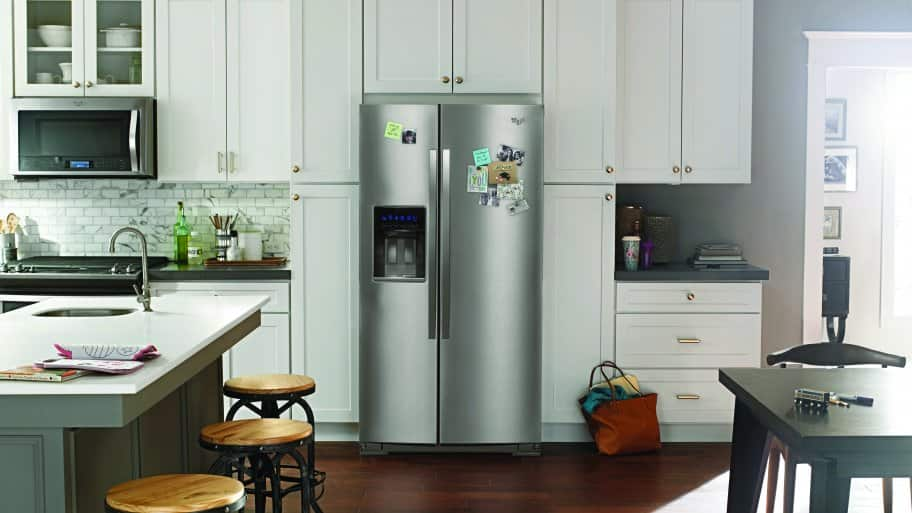
Consider these moving tips before you load up and move a refrigerator to your new home.

Shipping a refrigerator is not as common as it once was. Many people who move will purchase the refrigerator with the house, rather than bringing their old one.
But, sometimes, shipping your refrigerator is the better option or maybe the new house does not have a fridge. Before you can make the decision on whether or not you want to ship your fridge, you need to figure out the dimensions of the area where you plan to move it.
If you are able take the dimensions yourself, you should. If you're unable to do it yourself, ask the current resident to measure for you. Take measurements of both the location where you plan to put the refrigerator, as well as doorways and hallways. 
Making sure you are able to move your refrigerator into your new home before you start preparing for shipment is a very important step that should not be skipped. If the refrigerator doesn’t fit, you will need to make alternate plans.

Preparing your fridge for the move

Start by removing all items and packing the food separately from the refrigerator. It may be a good idea to try to use as much of the food as possible the week before it is time to move — the less perishable food to ship the better. 
After all of the food is removed, turn off and unplug the refrigerator. Next, make sure that the refrigerator is clean and disinfected. Remember, as soon as the refrigerator is off there is a higher chance of mold growing.
To keep the mold from growing, after the refrigerator is clean, make sure it is completely dry. And to help with the smell, place baking soda in both the refrigerator and the freezer, so it will absorb any odors. 
Note: The fridge should be turned off at least 24 hours prior to the move.
Once the refrigerator is clean and dry, decide whether or not you plan to remove or tape the shelves. Shelves and drawers will shift during shipment, which means they need to be demobilized before shipping.
If you can, it is safer to remove the shelves and drawers and wrap them in a separate box. And if they do not come out, make sure you tape them with clear tape.
Lastly, tape the doors to keep them from opening up on the moving truck or in transit. If you are shipping a refrigerator that is new or expensive and you are worried about dents or scratches, it is a good idea to wrap it with moving blankets.
Once the refrigerator has been wrapped, place a strap around both the moving blanket and refrigerator — this will keep both the doors shut along with prevent dents or scratches.


Moving companies, freight shipping, or DIY move?

There are multiple ways to ship a refrigerator — with a moving company (local or long distance), a freight company or you can do it yourself with the right-sized truck. 
Moving Company: With a professional mover, the process is simple. Call to schedule an appointment and they will pick it up. The only thing you will need to do it decide between an economy or "white glove" shipment.
With an economy shipment, you will need to box your refrigerator and bring it to the curb. For a white glove shipment, they will come inside, wrap your refrigerator and load it on the truck. Both of these types of shipments will require all of the preparations listed above.
Freight Shipping: This requires crating. Moving blankets can still be placed on the refrigerator to help protect it from scratches and dents. Freight shipping is a better option for business-to-business shipping and extra-large refrigerators. 
Do-it-Yourself: A DIY move requires a truck, dolly, straps and ramp. If you plan to move the refrigerator yourself, you will need to get the refrigerator into a truck without harming yourself or the refrigerator. Make sure your health is in good condition and that you are physically able to make a DIY move.
The last and very important step in shipping a refrigerator is waiting to plug it in. During transit, your refrigerator will most likely be put on its side and most definitely turned. In turning your refrigerator, the cooling may get moved and be in the wrong location.
Allowing your refrigerator to sit for a few hours (overnight if possible) before plugging it in is highly recommended.

Thursday, November 9, 2017

24 Ingenious Moving Hacks That Make Packing Painless

When your moving date creeps closer and closer, the mere thought of packing up can be daunting. Putting all your belongings into boxes just so that they can be taken out again is nobody's favorite activity, so we found some amazing moving tips that will make going to a new place easier than you ever thought possible. Check out these ingenious moving hacks below.
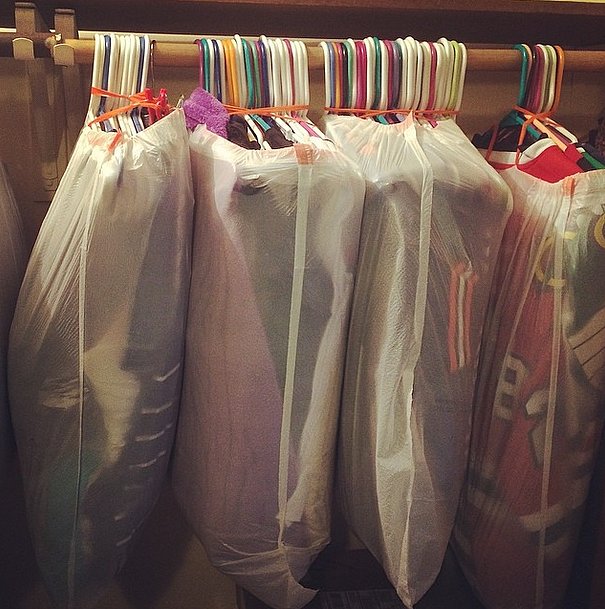
1. Slide clothes on hangers directly into garbage bags.
Unpacking will be a breeze.
2. Put cotton balls in your makeup compacts so they don't break.
They act as a cushion inside of fragile powder cosmetics.
3. Use toilet paper rolls to organize your cords.
Keep wires organized by wrapping each cord up and stuffing it inside an empty roll.
4. Take pictures of your house before you move in.
If you're a renter, make sure you document exactly how your house looks when you move in. You want that deposit back!
5. Wrap breakable dishware in your shirts.
Not only are you saving on bubble wrap, but you're also packing multiple items at once.
6. Use Unpakt to save money.
This awesome website will compare all of the movers in the area to help you find the lowest cost.
7. Cover all bottles of liquid (shampoo, cleaning supplies, etc.) with plastic wrap before putting the top on.


00:00
 
00:00
 
 
Avoid messy explosions.
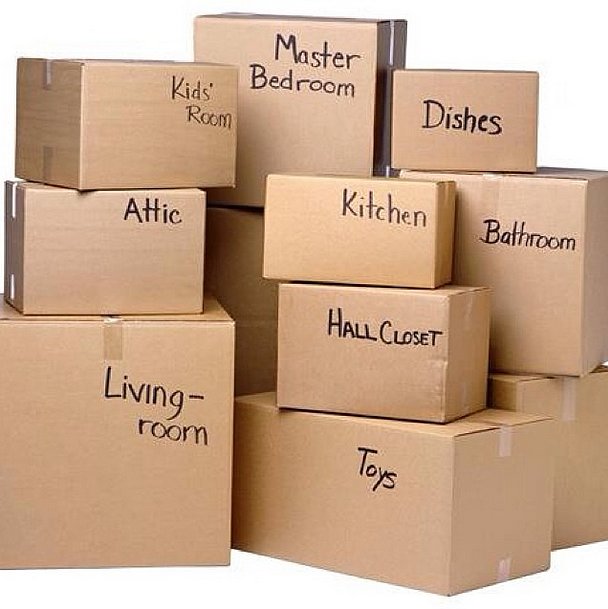
8. Color-code your boxes.
You will know exactly where everything goes.
9. If your painter's tape is dried up, put it in the microwave for a few seconds.
It will become sticky again.
10. Use suitcases for your heaviest items.
The handles and wheels will make for easy transportation.
11. Cut handles into the sides of cardboard boxes for easy lifting.
All you have to do is cut a rectangular shape on either side of the box.
12. Pack a separate small bag with all of your basics.
Chances are you won't unpack everything in one day, so make sure you have everything you need for one night easily accessible.
13. Fill nail holes with toothpaste.
It's the quick and cheap way to cover up all of those holes. Check out the video tutorial below.
14. Change your address in advance.
Make sure to take care of this pesky chore at least two weeks before move-out.
15. Defrost your fridge a day before moving out.
Avoid all kinds of leaks and nasty smells by doing this at least a day ahead of time.
16. Keep track of your moving expenses; some of them are tax-deductible.
Move now, save money later.
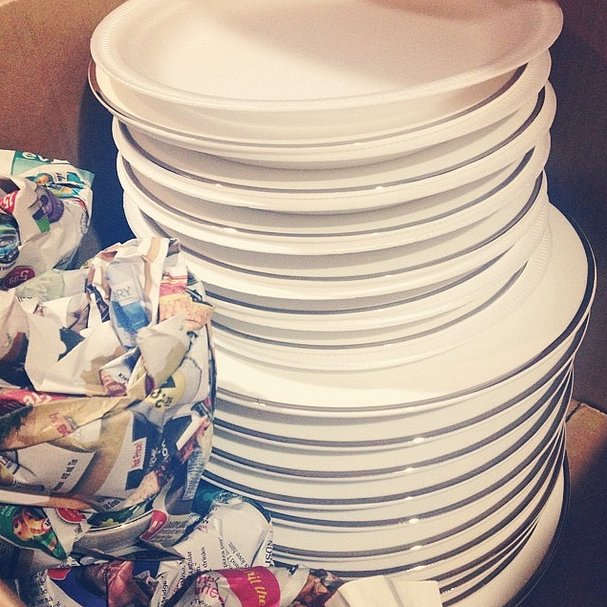
17. Stack plates with Styrofoam plates in between one another.
It's an easy and cheap way to make sure your plates don't break.
18. Roll up your clothes.
Instead of folding clothes, roll them all up to save lots of space.
19. Wrap a rubber band around your doorknob so you don't get locked out.
Wrap around one doorknob, then cross it over to the doorknob on the other side so that the lock is blocked. When you are going in and out of your house, you won't have to worry about being locked out.
20. Put towels underneath heavy furniture to avoid ruining floors.
The furniture will also slide away very easily.
21. Label your boxes on the side, not the top.
When you stack them, you will always be able to see what's inside.
22. Use sandwich bags for small important items like screws.
When you go to put a bed frame or bookshelf back together, they'll all be in the same place.
23. Find free moving boxes on the Craigslist "free" section.
You can also ask for boxes at local stores; they often have lots of leftovers.
24. Make sure to use the Moving Day app.
This app will make sure that you stay superorganized on your busy moving day by helping you catalog the things you pack. It also has a built-in bar code scanner and label maker so that you can keep track of all of your possessions.

Source: https://www.popsugar.com/smart-living/Moving-Hacks-Make-Packing-Easy-35362851

http://atlanticcoastmovers.com/24-ingenious-moving-hacks-make-packing-painless/

Thursday, November 2, 2017

How To Pack For A Move Like A Pro

How To Pack For A Move Like A Pro

How to pack like a professional packerAs soon as you learn for sure that there’s a residential move waiting for you in the upcoming months or weeks (or days!), you need to start making some important decisions that will determine just how successful your move turns out to be. There isn’t any time to lose – each case of unnecessary procrastination will only bring higher levels of stress later on when Moving day knocks on your door.
Without a doubt, one of the most crucial decisions, whenever you’re facing a house move, is who will take care of the toughest move-related job there is in this world and the next one – packing. That’s right, you just have to know, well in advance, whether your prized possessions will be packed by professional packers /all you need to know about professional packing services/ or by you, together with a few friends, maybe.
And should, for better or worse, you decide that you’ll be the one boxing up your own things for safe transportation, then you need to also know how to pack for a move like a pro packer. The good news? It’s not usually too complicated. The bad news? It’s not a piece of cake either.
So, ready to learn how to pack for a move like a professional? Read on, then.

Can you pack like a pro packer? [Absolutely!]

The mere thought of having to sort out, prepare and pack all of the household items in your house or apartment can be rather stressful and intimidating at first, but the chances are great that you can manage it on your own. Generally speaking, there are a few real life scenarios when you won’t normally have to resort to professional packers as the best solution:
  • Enough time. Time, as always is key when moving from one home to another, and non-professional packing of an entire household just requires much more time to be completed. But if you have at least a month until Moving day, then you should be able to do it without the pros.
  • No specialty items. If you don’t own a piano, or a pool table, a Jacuzzi hot tub, or any other possession that you just can’t picture handling on your own, then there’s a real chance to save money by packing for a move by yourself.
  • Previous packing experience. If you’ve already been there and done that, then there isn’t a single reason why you shouldn’t be able to do it again (unless time is against you, of course). Theoretically speaking, you’re supposed to pack up your home faster and better the second time around.
  • Friends willing to help. This is huge – if you know you will be able to gather loyal helpers with a single Facebook post, then you shouldn’t really hesitate to do it. This is also a good time to have some of your pals re-pay the favor when you helped them move out of their respective home.
And if you do make up your mind to follow 1) some basic safety rules when packing for a move, 2) some proven packing techniques that will save you both time and money, and 3) more importantly – your common sense, then you should be able to pack for a move like a professional packer.

Create a packing timeline [You’re not a pro packer yet]

How to pack for moving
Professional packing materials? Check.
In addition to extensive training, pro packers are good at what they do because they’ve done it so many times – they pack and protect all types of household items on a daily basis. Hence, they have the necessary experience to know where to start the packing process, how to continue it, and where to end it. In other words, they have memorized their own packing timelines, and those timelines work like clockwork.
So, in case you can’t afford professional packing services or you don’t really need them, you’re going to have to come up with a packing sequence of your own so that precious time is not wasted. You need to make sure that each sub-task of yours during the major task of packing up your home is the right one – the one you were supposed to be doing if you yourself were a professional. And to be able to do that, you’re going to need a good packing timeline that you can customize to make it your own.
The best thing about using a well-structured packing calendar is that it will help you optimize the time you’ve got to pack up your home. Okay, you know that you are expected to initiate the packing job as soon as humanly possible (right?), but do you know where to start packing for a move? The storage areas in your home /garage, basement, attic, shed/ should be your starting point, and then you’re recommended to transfer the packing action to the rooms you use the least, and then it’s on to the kitchen as it surely contains more than you think it does.

Avoid costly packing mistakes [Like a true professional packer]

As hinted above, professional packers seldom make any mistakes thanks to their training and experience, and you should avoid committing any serious packing errors as well. Depending on the nature of the error, packing mistakes can be classified all the way from being barely noticeable (like forgetting to double tape the sides of a moving box for extra protection) to being rather costly (like failure to wrap your breakables in sufficient layers of bubble wrap and packing paper).
It can be hard to know which packing errors are likely to hurt your house move the most because of the variables surrounding each relocation case. Yes, it’s usually a mistake not to prepare a few essentials boxes filled to the brim with, well, essentials, but you may be just okay without such survival kits too. And it’s usually a bit risky to overfilling your cardboard boxes and making them heavier than they are supposed to be, but again, those moving boxes of yours may just hold up fine despite the extra weight.
However, pack absolutely all of the household items found under your roof and you’ll have a classic example of lost time and money. What’s more, try to pack up and move a specialty item without professional assistance, and things can get plain dangerous. No matter how confident you are, you’d still better leave most of the specialty items you own for the pros. Examples of such specialty items to be packed by experienced professionals include pianos, pool tables, hot tubs, large metal safes, antique furniture and a number of other large, heavy, bulky, and expensive items found in people’s homes.

How to pack for a move like a pro [professional packing tips]

How to pack for moving fast
The start of your self-packing marathon looks promising enough.
Before we give you some professional advice on how to pack your house for moving, let’s just emphasize the importance of securing quality packing supplies. Pro packers always seem to have the best packing materials on hand, don’t they? And they always seem to have enough of them no matter the size of the home or the number of items in it, right?
Bubble wrap and soft packing paper are ideal for protecting fragile items but your biggest expense when it comes to packing supplies will be the cardboard boxes. And if you can manage to find strong and clean packing boxes of the right size for free, then you can rest assured that you’ve just saved yourself plenty of money. Not bad, eh?
Still waiting for that valuable advice on how to pack for a move? Here’s a brief packing checklist with quick links that will give you much more detailed information.

#1. How to pack boxes for moving

  • Reinforce the bottom of each cardboard box with high-quality tape before using it.
  • Place one sheet of Bubble wrap or two sheets of packing paper on the bottom of packing boxes prior to filling them up.
  • Do not leave too much space inside the cardboard boxes – use different types of filling and padding materials to immobilize the content inside.
  • Use smaller boxes to pack heavier items, and larger containers for storing and transporting lighter items, not the other way round.

#2. How to pack clothes for moving

  • Go through your clothes carefully and set aside the pieces you won’t ever wear again – don’t waste your time packing them.
  • Group the clothes you are going to pack by material, size and purpose to speed up the packing process.
  • Consider using special wardrobe boxes for your more expensive clothes to keep them wrinkle-free from start to finish.
  • Use all suitcases you can find in your home as the best packing boxes ever.

#3. How to pack shoes for moving

  • Prepare your shoes for packing by sorting and cleaning them thoroughly.
  • Use clean packing paper or socks to stuff some of your more fragile pairs to preserve their shape.
  • Use the original shoe boxes or small to medium-sized boxes that are both clean and strong.
  • Always pack your shoes in pairs, and don’t forget to label the packed boxes.

#4. How to pack jewelry for moving

  • How to pack for a long distance move
    If you’re keeping pace with your packing schedule, packing for a move can be kind of fun.
    Remember to keep your jewelry pieces with you at all times – don’t even think about entrusting them to your movers.
  • The best way to pack jewelry for moving is to place them in a dedicated jewelry box.
  • Use plenty of soft packing paper and even Bubble wrap for your more delicate pieces of jewelry.
  • Keep earrings from getting hooked together. Keep long chains from getting entangled in other another.
  • Use day-of-the-week pill cases to keep your smaller pieces separate.

#5. How to pack dishes for moving

  • Kitchen dishes are rather breakable so use caution when handling each piece.
  • If possible, pack your kitchen plates in dish boxes – cardboard boxes with thicker walls for extra protection.
  • Packing paper and Bubble wrap are your best friends when packing plates for moving, so don’t skimp on them.
  • Wrap each breakable piece in soft packing paper, tape it in place and arrange it in the box standing on its edge.
  • Label all packed boxes with FRAGILE and HANDLE WITH CARE.

#6. How to pack glasses for moving

  • Similar to kitchen plates, glasses are one of the most fragile items found in your home, and one of the trickiest household items to pack either.
  • Wrap each glass in at least two sheets of white packing paper, and then use tape to keep the bundle in place.
  • Pay special attention to the stems of your stemware glasses – that’s where you must use sheets of Bubble wrap to prevent untimely breakage.
  • Write EXTRA FRAGILE on any box that contains packed glassware.

#7. How to pack paintings for moving

  • Framed artwork can be extremely valuable so it’s important to know how to protect paintings and pictures when moving house.
  • Cut out appropriate pieces of cardboard and place them above the frames regardless of whether there is protective glass or not.
  • Wrap your paintings or photos in large pieces of packing paper, or use big sheets of Bubble wrap for your more valuable artwork.
  • Get special picture boxes from your local movers or break down regular packing boxes to create makeshift ones.

#8. How to pack electronics for moving

  • Electronic equipment is usually rather expensive so the last thing you’d want is to find something broken after the move.
  • For best protection, use the original packages that your individual electronic pieces came in when you bought them.
  • Find good and sturdy cardboard boxes of similar sizes, and take advantage of the ultimate protective properties of Bubble wrap – preferably the anti-static kind.
  • Take photos of the way your equipment is wired before disconnecting any cables.
  • Keep accessories together with the main unit to facilitate the reconnection after the move.

#9. How to pack books for moving

  • How to pack furniture when moving house
    It’s usually best to leave large and heavy furniture pieces to be packed by the real pros.
    Sort out your book collection prior to packing – you don’t need to move all the books you own, do you?
  • When packed together, books can become too heavy too quickly so use only small to medium-sized boxes to transport them.
  • Your best bet is to use a wheeled travel bag for packing and moving your books.
  • Don’t make book-filled cardboard boxes heavier than around 40 lbs. in order to avoid trouble.
  • Never pack books in a box with their spines facing you to avoid the risk of damaging your reads.

#10. How to pack furniture for moving

  • Large furniture pieces are best moved between two homes if they are disassembled first. Can you do that required disassembly job without professional assistance?
  • Special furniture blankets have proved to be the best protection for delicate furniture – speak with your local movers about getting such blankets, or use any regular blankets that you can spare.
  • Considering the huge size and extreme weight of most household pieces of furniture, do consider leaving the risky job of packing and moving furniture to professional packers and movers.
source:http://www.themovingblog.com/pack-for-a-move-like-a-pro/